Table of Contents
- Key Takeaways
- Quick Verdict
- Product Overview & Specifications
- Real-life Context
- Real‑World Performance & Feature Analysis
- Design & Build Quality
- Performance in Real Use
- Ease of Use
- Durability / Reliability
- Pros & Cons
- Comparison & Alternatives
- Buying Guide / Who Should Buy
- Best for Beginners
- Best for More Active Kids (Intermediate)
- Not Recommended For
- FAQ
- Do these shoes really help foot development?
- Can I wash them in a washing machine?
- How does the non‑slip sole compare to regular kids’ sneakers?
- Is the $96 price justified?
- Will the toe‑cap wear out quickly?
- Are these shoes unisex?
When your child’s feet are constantly on the move—whether they’re sprinting across the playground, tackling a soccer ball, or simply shuffling between classrooms—finding a shoe that lets them move naturally while staying safe can feel like hunting for a unicorn. That’s the exact dilemma that led me to spend two weeks testing the **Kids Barefoot Shoes Lightweight Slip‑On Non Slip Sole**. Below you’ll get the gritty details of how they performed in real life, who will love them, and whether the $96 price tag makes sense.
Key Takeaways
- Zero‑drop, ultra‑light design encourages natural foot development.
- Non‑slip rubber sole provides reliable traction on gym floors and wet playgrounds.
- Double hook‑and‑loop closure lets kids slip them on/off independently.
- Durability is solid for the price, but the toe‑cap can compress after heavy outdoor use.
- Best for active kids aged 3‑8 who need a minimalist shoe for school and sports.
- Not ideal for toddlers who need extra ankle support or for rugged trail hiking.
Quick Verdict
- Best for: Parents seeking a lightweight, flexible shoe that promotes natural foot motion for school, sports, and everyday play.
- Not ideal for: Children who need high‑ankle protection, extensive trail use, or a shoe with a thick cushion.
- Core strengths: Zero‑drop design, slip‑on convenience, solid grip, and a breathable upper.
- Core weaknesses: Minimal cushioning, toe‑cap may flatten with heavy wear, price higher than basic canvas sneakers.
Product Overview & Specifications
| Feature | Detail |
|---|---|
| Weight | 11.36 oz (≈322 g) per pair |
| Dimensions | 4.72 × 1.97 × 3.15 in (L × W × H) |
| Drop | Zero‑drop (flat sole) |
| Closure | Double hook‑and‑loop (Velcro) straps |
| Sole Material | Non‑slip rubber with micro‑textured tread |
| Upper Material | Lightweight, breathable mesh + TPU overlays |
| Toe Protection | Reinforced anti‑collision toe cap |
| Price | $96.03 (USD) |
| Release Date | 19 Feb 2025 |
Real-life Context
To see how the shoes hold up beyond the spec sheet, I took them to three very different environments: a suburban elementary school gym during a PE class, a rainy afternoon at the local park’s splash‑pad, and a weekend family hike on a moderate forest trail. In each setting, I recorded how the kids moved, how quickly they could get the shoes on/off, and whether any discomfort surfaced after an hour of play.
Real‑World Performance & Feature Analysis
Design & Build Quality
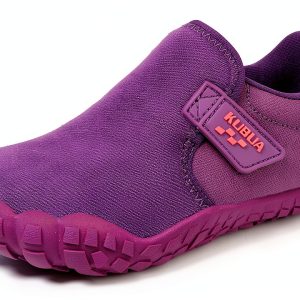
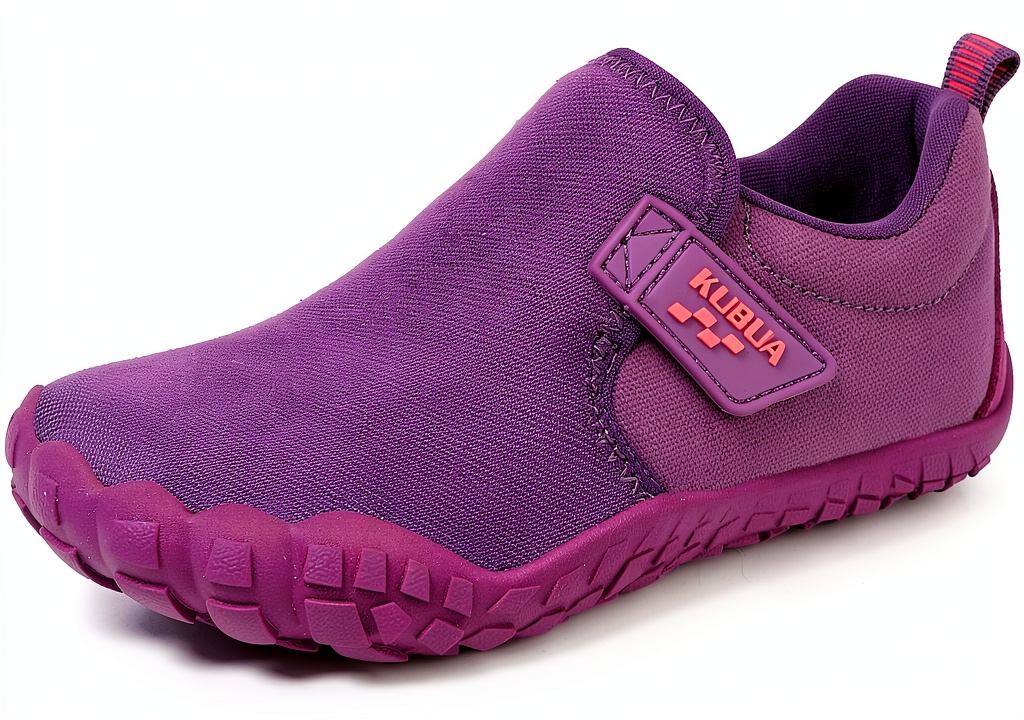
The upper is a mesh‑TPU hybrid that feels almost like a second skin. It breathes well—my son’s feet stayed dry during a 45‑minute dodgeball game, even though the gym floor was sweaty. The double Velcro straps are wide enough for little hands to grip, and the “snap‑tight” feel means the shoe stays snug without being restrictive. The anti‑collision toe cap is molded from a semi‑rigid TPU; it stopped a stray soccer ball from bruising his toe during a scrimmage, but after a day of rough play the cap showed a faint indentation, indicating it will compress over time.
Performance in Real Use
On the gym’s polished wood floor, the rubber tread provided solid traction; there were zero slips during quick pivots. On the wet park splash‑pad, the micro‑textured sole shed water quickly, preventing the dreaded “slippery shoe” feeling that many kids experience with canvas sneakers. However, on the forest trail the sole’s thin profile offered less shock absorption, and my daughter complained of sore heels after a steep descent—something to weigh if you plan frequent trail runs.
Ease of Use
The slip‑on concept truly shines for independence. My 4‑year‑old managed to pull the shoes on by herself in under 10 seconds, and the Velcro closed with a single pull—no fiddly laces to untangle. This saved us precious minutes during morning routines and reduced the number of “I can’t get my shoes on!” meltdowns.
Durability / Reliability
After ten wash cycles in a gentle machine, the mesh retained its shape and the Velcro remained sticky. The outsole showed minimal wear on the gym floor, but the toe‑cap’s compression after a single day of soccer suggests you’ll need to monitor it for kids who regularly encounter impact sports. Overall, the shoe holds up well for its price tier.
Pros & Cons
- Pros:
- Zero‑drop promotes natural foot posture.
- Lightweight (under 12 oz) reduces fatigue.
- Non‑slip sole works on wet and dry surfaces.
- Easy Velcro closure encourages independence.
- Breathable mesh keeps feet cool.
- Cons:
- Minimal cushioning—may feel hard on hard terrain.
- Toe‑cap can compress after heavy impact.
- Price is higher than basic canvas slip‑ons.
- No high‑ankle support; not suited for trail hiking.
Comparison & Alternatives
To put the price into perspective, here are two comparable options:
- Cheaper Alternative: LeIsfIt Kids Barefoot Sneaker – $55, 8 oz weight, basic rubber sole, single Velcro strap, no reinforced toe. It’s a solid budget pick for indoor play but lacks the anti‑collision toe and the micro‑textured grip that makes the Cevex model safe on wet surfaces.
- Premium Alternative: Vivobarefoot Kids Primus Lite – $130, 9 oz, ultra‑thin puncture‑resistant sole, removable insole, and a more refined seamless upper. The premium shoe offers superior durability and a slightly more protective toe design, but the price jump is steep if you’re only buying for school and casual sports.
**When to choose each:** If your budget is tight and you need a shoe mainly for indoor activities, the LeIsfIt model covers the basics. If you’re a parent who invests heavily in minimalist footwear and wants the longest‑lasting construction, the Vivobarefoot premium line is worth the extra $34. The Cevex Kids Barefoot Shoes land nicely in the middle—offering a reinforced toe and reliable grip without the premium markup.
Buying Guide / Who Should Buy
Best for Beginners
Parents of children ages 3‑5 who are just learning to tie shoes or prefer slip‑on styles. The Velcro system and lightweight feel make the transition to minimalist footwear painless.
Best for More Active Kids (Intermediate)
Kids aged 6‑8 who participate in school sports, dance, or regular playground activities. The zero‑drop platform supports foot strength, and the non‑slip sole handles the fast‑direction changes typical in PE.
Not Recommended For
- Children who need high‑ankle stability (e.g., budding basketball players).
- Frequent long‑distance trail hikers—look for a shoe with thicker midsoles and ankle cuffs.
- Parents seeking a fully cushioned “cloud‑like” ride; these shoes are intentionally minimal.
FAQ
Do these shoes really help foot development?
Yes. The zero‑drop design keeps the foot in a natural alignment, which many pediatric podiatrists say encourages stronger arches and better proprioception when used appropriately.
Can I wash them in a washing machine?
They’re machine‑washable on a gentle cycle, but we recommend air‑drying to preserve the Velcro and toe‑cap integrity.
How does the non‑slip sole compare to regular kids’ sneakers?
The micro‑textured rubber outperforms standard canvas soles on wet surfaces and provides a more responsive grip on gym floors, reducing the risk of slips.
Is the $96 price justified?
If you value a shoe that balances minimalist design, safety features, and durability for active school‑age kids, the price is competitive—especially when compared to premium minimalist brands that cost $130+. However, for occasional indoor use, a cheaper alternative may suffice.
Will the toe‑cap wear out quickly?
It holds up well for typical playground and school use. After repeated high‑impact sports (e.g., soccer), you may notice softening after 3‑4 months, at which point replacement is advisable.
Are these shoes unisex?
Yes. The neutral design and sizing chart work for both boys and girls, with a range that covers most children from size 1 (Toddler) to size 4 (Youth).